
Concrete care field guide
How to Clean Concrete: Oil, Rust, Battery Acid & Organic Stains
The stain source matters more than the color. Learn how common concrete marks behave, what professional cleaning can improve and when the slab itself has been permanently changed.
Published January 17, 2026 · Updated field-guide format · About 8 minutes
Southern California
Residential and commercial guidance
Real project photography
Images from Inland Power Wash work
Surface-specific advice
Cleaning limits explained clearly
Start here
The quick answer
Identify the cause before treating the color
Oil usually needs degreasing and time. Rust responds to surface-appropriate chemistry. Battery acid can etch the concrete, leaving texture damage after discoloration improves. Organic buildup often responds to a lower-pressure wash process.
The same brown or dark mark can come from very different sources. Before choosing a cleaner, note where the stain began, how old it is, whether the concrete is sealed and what has already been applied.
Four common problems
Match the treatment to the stain
01
Oil and grease
Absorbed petroleum residue may need degreasing, agitation, heat where appropriate and more than one treatment.
02
Rust
Orange-brown staining usually needs chemistry selected for both the rust source and the underlying surface.
03
Battery acid
Acid can discolor and physically etch concrete. Cleaning cannot rebuild a texture that has already been damaged.
04
Organic buildup
Algae, mildew and leaf tannins are handled differently from petroleum or mineral-based stains.
Oil and grease
Why pressure alone rarely solves an oil stain
Concrete is porous. Fresh oil may sit near the surface, while older oil can migrate deeper and oxidize into a darker mark. High pressure by itself can spread residue, leave a lighter halo or scar the surrounding finish.
A professional approach may combine a suitable degreaser, dwell time, agitation, hot water when appropriate and controlled rinsing. Older automotive oil, diesel and cooking grease may need repeat treatment, and a shadow can remain.


Rust stains
Remove the stain—and look for the source
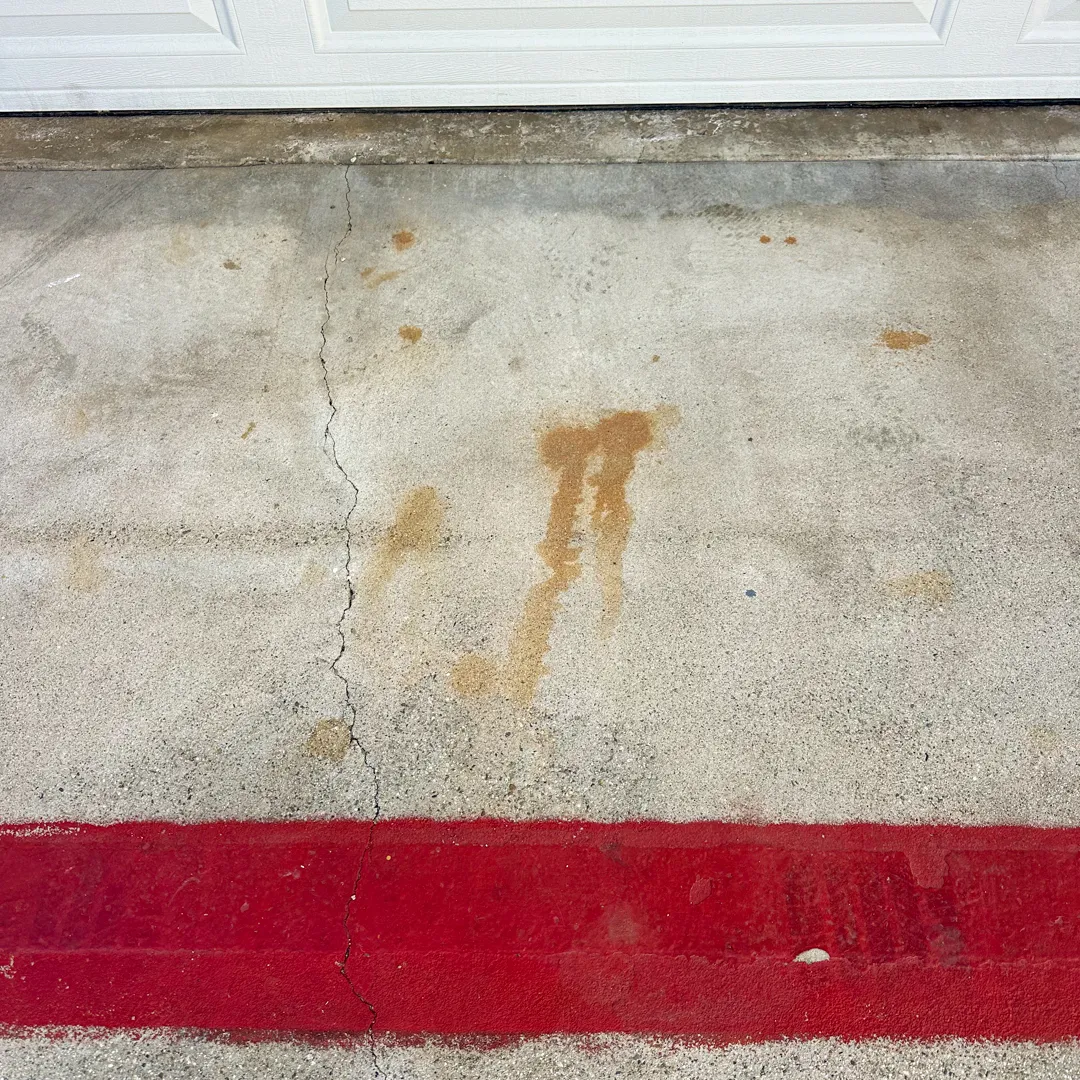
Rust can come from patio furniture, irrigation, fertilizer, fasteners, air-conditioning equipment or metal inside the structure. Because the staining is a chemical deposit, more pressure is not the answer.
Treatment should be selected for the surface and rinsed according to the product instructions. If the metal source keeps bleeding, the orange mark can return after the surface is cleaned.
Do not treat every orange mark as surface rust
Rust migrating from embedded metal or a building component can point to a repair issue. Cleaning may improve the visible stain without correcting the source.
Acid and organic marks
Two stains that need very different expectations
Battery acid can change the concrete itself
Golf carts, forklifts and vehicle batteries can leave yellow-brown discoloration. More importantly, acid can react with the cement paste and create a rough or “burned” area.
Neutralization and cleaning may improve the color, but they do not restore missing material. A visibly etched spot may need repair, resurfacing or another finish decision after the chemical concern has been addressed.
Organic buildup usually responds to gentler cleaning
Algae, mildew and leaf residue often collect in shaded or slow-drying areas. Appropriate chemistry, controlled dwell time and lower pressure usually do more useful work than force alone.
Leaf tannins can be stubborn, and recurring growth may point to shade, irrigation or drainage conditions that let moisture remain.

Protect the surface
Why professionals do not simply “turn up the pressure”
Pressure is only one part of cleaning. Water temperature, chemistry, dwell time, agitation, rinse control and the condition of the slab can matter more.
Aggressive pressure can etch a weak surface, expose aggregate, create wand marks or produce permanent stripes. Decorative, colored and sealed concrete need extra caution because the finish may respond differently from ordinary broom-finished concrete.
Stop if the color changes unexpectedly
Yellow, green or orange reactions can indicate incompatible chemistry or a contaminant that needs a different process.
Stop if the surface begins to change
Pitting, exposed aggregate, flaking sealer or a soft surface are reasons to reassess before continuing.
Stop before mixing products
Combining cleaners can create dangerous reactions. Follow labels and keep unknown chemistry out of the process.
Related services
Go from identification to a clear cleaning scope
Driveway & sidewalk cleaning
For broader concrete cleaning around homes, entries and pedestrian areas.
Oil stain removal
For targeted petroleum and grease treatment with realistic expectations for absorbed stains.
Rust stain removal
For surface-appropriate treatment of orange-brown staining and source-related guidance.
Mineral deposit removal
For efflorescence and hard-water buildup that does not behave like ordinary dirt.
Concrete stain FAQ
Common questions before treating concrete
Can an old oil stain be completely removed from concrete?
Sometimes a major improvement is possible, but complete removal depends on the oil, stain age, concrete porosity and previous treatments. Deeply absorbed oil can leave a shadow after more than one treatment.
Will pressure washing remove rust from concrete?
Pressure alone is usually ineffective and can damage the surface. Rust typically needs chemistry selected for the concrete and the source of the stain.
Can battery acid damage be cleaned away?
Cleaning and neutralization may improve discoloration, but etched or missing surface material is physical damage. That texture change may require repair or resurfacing.
Is the black or green staining on my driveway mold?
It may be algae, mildew or another organic buildup, but color alone is not enough to identify it. Location, moisture and how the mark responds to a small controlled test provide more useful clues.
Should sealed or decorative concrete be treated differently?
Yes. Sealers, color systems and decorative finishes can react differently from ordinary concrete. Identify the finish and test the proposed process in an inconspicuous area.
Continue reading
What if cleaning reveals a larger problem?
Cracks, corrosion, failed coatings and drainage patterns can become easier to see after buildup is removed. The next guide explains how to document what appears and when cleaning should give way to repair assessment.
Reviewed from the field
Prepared for Inland Power Wash using the company’s existing service scope and real project library. Surface condition and previous treatments can change the appropriate approach.
Need help with a concrete stain?
Send one close-up, one wide photo and anything you know about the cause
We will review the surface, the likely contaminant and the surrounding area so your quote reflects the work—and the limits—you should expect.